

Quick answer
Parkomate Indoor PGS is an indoor parking guidance system for basements and multi-level parking decks. It uses bay-level detection, LED indicators, display boards and management software to show available spaces in real time and guide drivers without manual searching.
Parkomate Indoor PGS is an indoor parking guidance system for basements and multi-level parking decks. It uses bay-level detection, LED indicators, display boards and management software to show available spaces in real time and guide drivers without manual searching.
Specifications
- Deployment context
- Indoor basements, covered multi-level car parks, enclosed decks
- Detection options
- Bay sensor or AI camera configuration; final selection after site survey
- Guidance layer
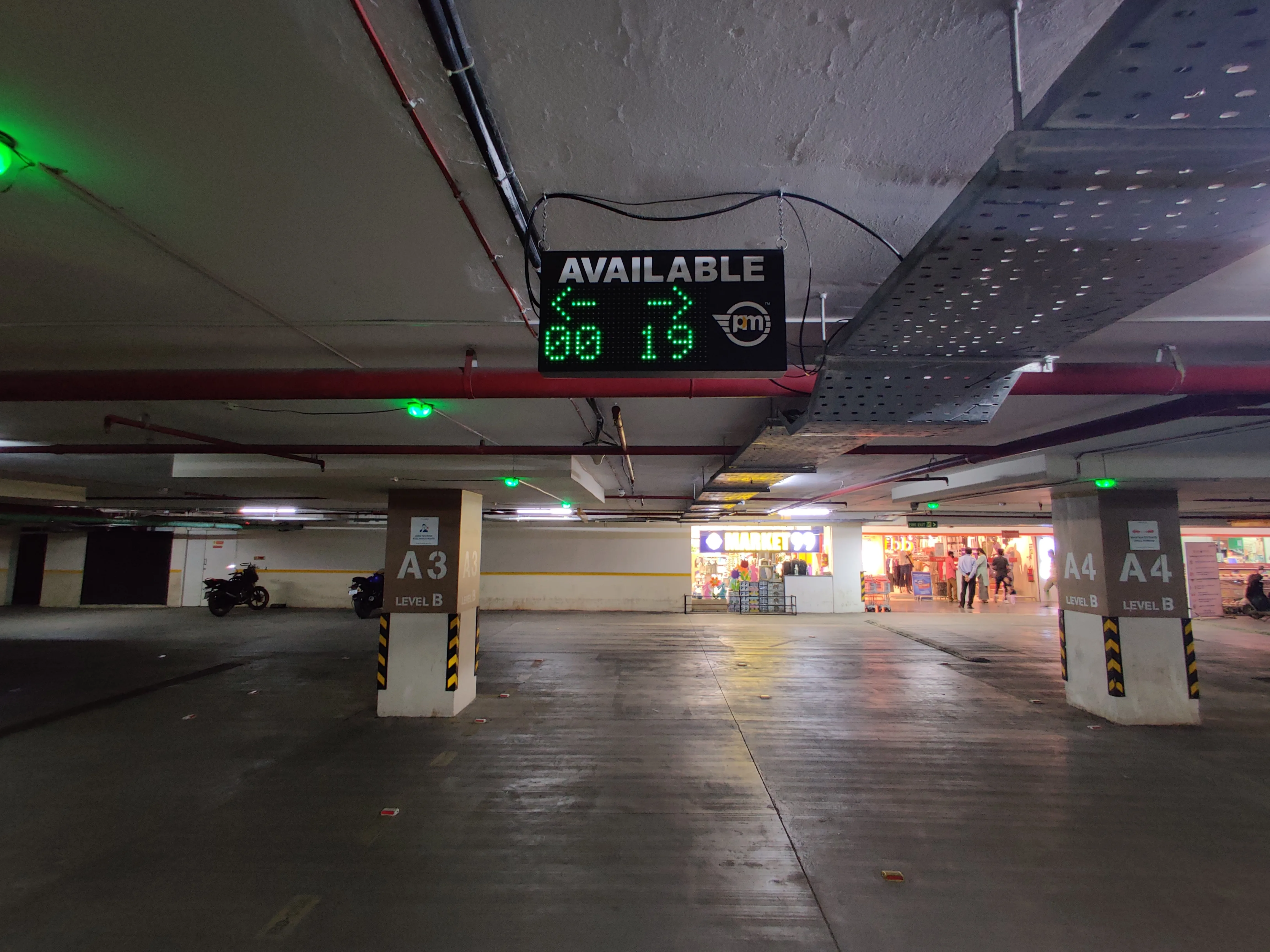
- Bay indicators, aisle/level display boards, entrance display boards
- Software
- PARKMINISTRATOR and Parking Analytics as needed
- Integration
- BMS, PMS, ANPR, boom barriers and APIs where required
- Civil readiness
- Cable routes, ceiling mounting points, power/network points, display mounting locations
How it works
- A vehicle enters or leaves a bay inside the parking deck.
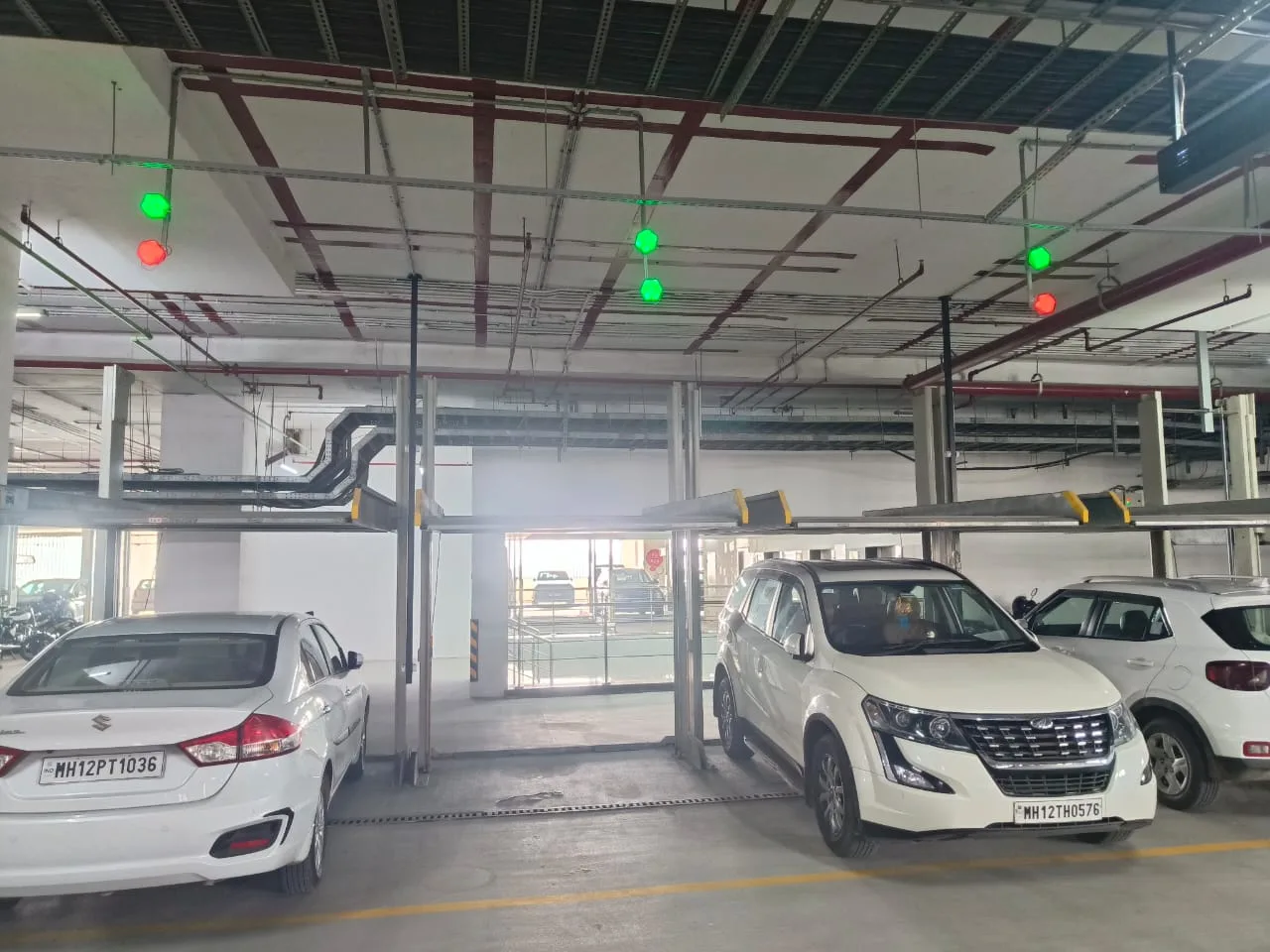
- Ceiling-mounted sensors or camera-based detection units read bay status as per the selected design.
- The controller updates the bay LED indicator and the zone availability count.
- Display boards guide drivers to the level or aisle with open bays.
- The dashboard stores occupancy data for operations and reporting.
Best suited for
Best for covered parking where bay status must be visible while drivers are moving. Use this when:
- The site is a basement, podium, mall deck, office tower, hospital parking level or residential tower.
- Drivers need red and green bay indicators or level-wise availability counts.
- The parking layout has multiple ramps, aisles, hidden bays or decision points.
Compare with: use Camera PGS when visual analytics, wrong-park detection or ALPR is useful, and Outdoor PGS for exposed surface lots and open rooftop parking. Indoor PGS works best where drivers cannot see available bays from the entry point.
Installation and civil requirements
- Final marked parking layout with bay numbering.
- Ceiling or beam mounting locations above bays and aisles.
- Power and network routes to controllers, cameras or sensors.
- Display board mounting points at entry, ramps and junctions.
- Access windows for installation without disrupting facility operations.
Photo gallery
Parking installation photo
FAQ
Common questions
What is an indoor parking guidance system?
It is a system that detects whether indoor parking bays are occupied or available and guides drivers through LED indicators and display boards.
Can Indoor PGS work in an existing basement?
Yes. Existing basements can be upgraded after a site survey for ceiling height, cable routes, bay markings and display locations.
Does Indoor PGS need one sensor for every bay?
Not always. A camera-based design can monitor multiple bays per camera, while some sites may use individual bay sensors. The final architecture depends on the site.
Can it connect with Find My Car?
Yes, when plate or slot data is captured accurately, the same infrastructure can support Find My Car workflows.
What should be ready before installation starts?
Parking bay markings, numbering logic, mounting access, power points, network routes and operating permissions should be ready before work begins.